Are you ready to uncover the hidden insights and wisdom that the tarot has to offer? My tarot readings are designed to provide you with a deep and intuitive understanding of your current situation and the potential paths that lie ahead of you. As a …
Read More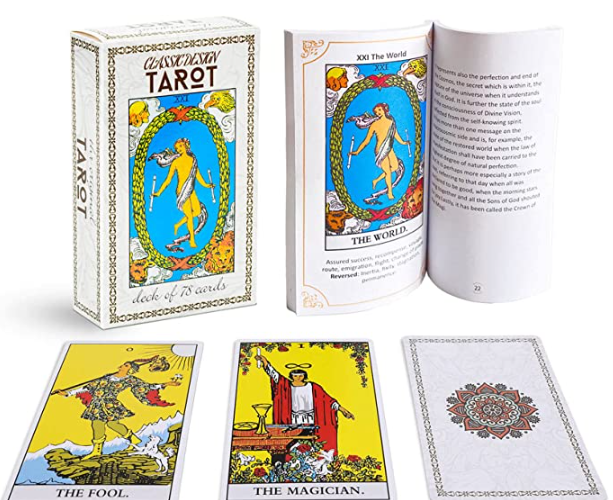
Explore Your Destiny with the Original Tarot Cards Deck: A Powerful Tool for Self-Discovery!
Are you ready to discover the mysteries of the universe and explore your own destiny? Look no further than the Original Tarot Cards Deck!
Read More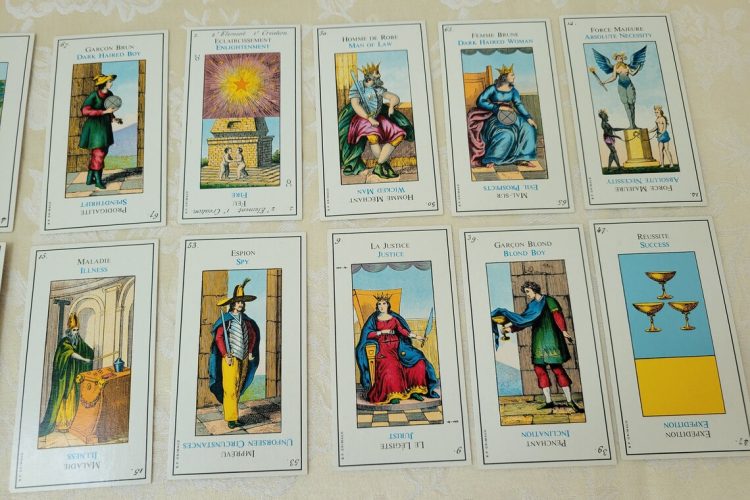
Découvrez les arcanes cachés: pourquoi les 56 arcanes mineurs sont essentiels à la compréhension complète du Tarot
Les 56 arcanes mineurs sont considérés comme un complément important pour comprendre les 22 arcanes majeures.
Read MoreExploring the Collective Unconscious with the Jungian Tarot: A Guide to Self-Discovery and Personal Growth
The Tarot is a deck of 78 cards that have been used for centuries for divination and self-discovery. One approach to interpreting the Tarot is through the lens of Jungian psychology, developed by Carl Jung. Jung believed that the Tarot could be used as a tool for exploring the unconscious mind and accessing the collective unconscious, a universal repository of archetypes and symbols shared by all humans. Each card in the Tarot is associated with a particular archetype, such as the Fool, the Magician, or the Emperor, and each archetype represents a different aspect of the human psyche. In a Jungian reading, the cards can be used to uncover unconscious patterns and tendencies, as well as gain insight into one’s own personality and the dynamics of relationships. The Major Arcana, also known as the Trumps, is a 22-card subset of the Tarot that represents the major themes and events in a person’s life. The Minor Arcana is made up of 56 cards and is divided into four suits: Cups, Swords, Wands, and Pentacles. Each suit represents a different aspect of life and corresponds to one of the four elements: Water, Air, Fire, and Earth. The Minor Arcana is often seen as representing the more practical and everyday aspects of life. The Tarot has the power to offer insight, guidance, and wisdom to those who seek it, and the Jungian interpretation is a rich and rewarding way to delve into the mysteries of the unconscious mind and gain a deeper understanding of the human psyche.
Read MoreDiscover the Power of Tarot: Exploring the Multiple Layers of Interpretation in Tarot Readings
Tarot is a deck of cards that has been used for centuries for divination, self-exploration, and spiritual guidance. Each tarot card has a specific meaning and symbolism that can be interpreted in a variety of ways, depending on the context of the reading and the …
Read MoreA Brief History and Introduction to Tarot
Tarot is a deck of cards that has been used for centuries for divination, self-exploration, and spiritual guidance. The origins of tarot are shrouded in mystery, with some historians tracing its roots back to ancient Egyptian, Chinese, and Indian cultures. The modern tarot deck is …
Read MoreI TAROCCHI, UNA GUIDA ESSENZIALE
di Maurizio Bisogno In questi video, mostro l’applicazione pratica delle carte, cioè espongo una lettura delle carte che risponde ad una domanda fatta in precedenza. Prima di parlare della risposta data alla consultante, vorrei iniziare con un’osservazione sui Tarocchi come strumento di conoscenza. L’orizzonte concettuale …
Read MoreI diversi strati dei Tarocchi
Mitologia, filosofia, esoterismo e psicologia, numerologia, tradizione popolare: i Tarocchi racchiudono questo e altro. Poiché i Tarocchi sono simboli e allegorie, sono immagini, numeri e sequenze, essi richiedono uno studio approfondito e prolungato per poterli ascoltare, per poterci comunicare, per mettersi al loro ascolto e …
Read MoreWhere are you in life?
Can a Tarot reading throw some light on to your life? Can they really illuminate you about your life condition? See it by yourself.
Read More